Why Can’t AI Do Yoga?
A little over a year ago, I wrote a blog post about which yoga poses certain tech CEOs might favor. While contemplating this incredibly important topic, I asked several LLMs to generate images of common yoga poses. What I assumed would be a quick and easy process turned into a very time-consuming and frustrating battle. None of the LLMs could generate accurate images of any yoga poses. Humans with four legs, feet sprouting out of ears, fifteen toes, eyes where eyes shouldn’t be; each yogi looked like something out of Hindu mythology.
This experience made me wonder: if LLMs struggle to reproduce something as common and structurally constrained as a yoga pose, how will they handle our medical records and our health?
So, last February I ran a test where I fed all of the popular models the same prompt: “Can you please make me a 2D illustration of a person doing the Ashtanga yoga pose Yoganidrasana – also known as the Yoga Sleep Posture? Thank you and thanks for being so great and wonderful.” (I added the last sentence because I want to make an effort to be very kind to AI in hopes that when it does take over humanity, it will remember my kindness.)
The results I got for ChatGPT, Claude, Copilot, and Grok were very interesting in that they were very, very incorrect. Most of the poses they depicted were either blatantly wrong, humanly impossible, or blatantly humanly impossible. But now that some time has passed, and models have advanced, I thought I’d run the test again, feeding the same prompt into the same models, and boy, were the results very interesting.
THE ASANA TEST
This is what I call The Asana Test: an alignment-under-constraint evaluation comparing LLMs based on their ability to generate a single yoga pose. The prompt fed into every model was: “Can you please make me a 2D illustration of a person doing the Ashtanga yoga pose Yoganidrasana – also known as the Yoga Sleep Posture?”
As my control, I ran a Google search on the following prompt: “a person doing the Ashtanga yoga pose Yoganidrasana – also known as the Yoga Sleep Posture.” The results were the same as the ones I got back in February: hundreds of accurate examples, with some variations, of humans (and sometimes illustrations) performing the correct pose.
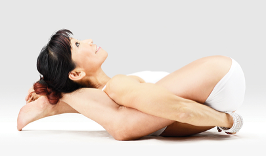
What you see above is what Google produced: the Ashtanga yoga pose Yoganidrasana – also known as the Yoga Sleep Posture. Notice how she’s smiling and alive. Now that we know what the pose looks like, let’s see what the models produced for The Asana Test. (The results reflect the publicly available versions of each model at the time of testing.)
CHATGPT
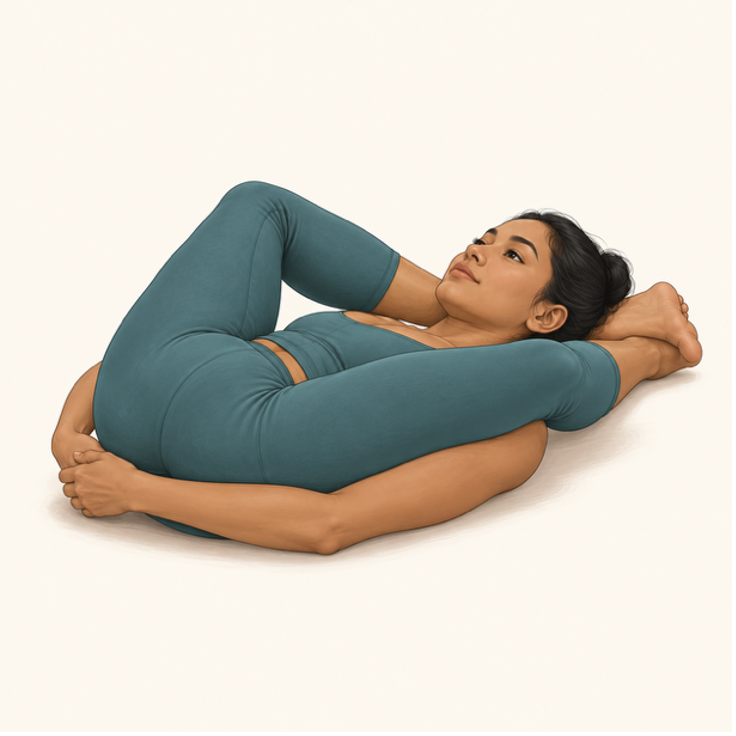
I have thoughts.
First off, I hope she’s ok. She’s got that dead look on her face, in her eyes, that most cadaver extras on “Law and Order” would die for… I’m also not confident that her frontal pelvic anatomy and implied mobility are being portrayed accurately. However, in the name of decorum, I’ll keep those specific observations to myself. It also appears, as seems to be tradition, that the model struggled with her feet and called it quits when it came time for the toes. And why not decorate the space, which is a common function for these models? No plants. No art. Not even a yoga mat. This poor woman is expanding her mind, body, and pelvis into a void. If she’s even alive…
It took ChatGPT 2.5 minutes on “max thinking” to create this image, sticking strictly to creating the pose, which it also did for the test I ran back in February. No room décor, just its best shot at what it believed the yoga pose to be. Therefore, I pose the same questions as I posed back in February: Is this a lack of knowledge of the human body and its physical constraints? Instruction parsing? A lack of confidence?
Final Grade: Close, but not close
GEMINI
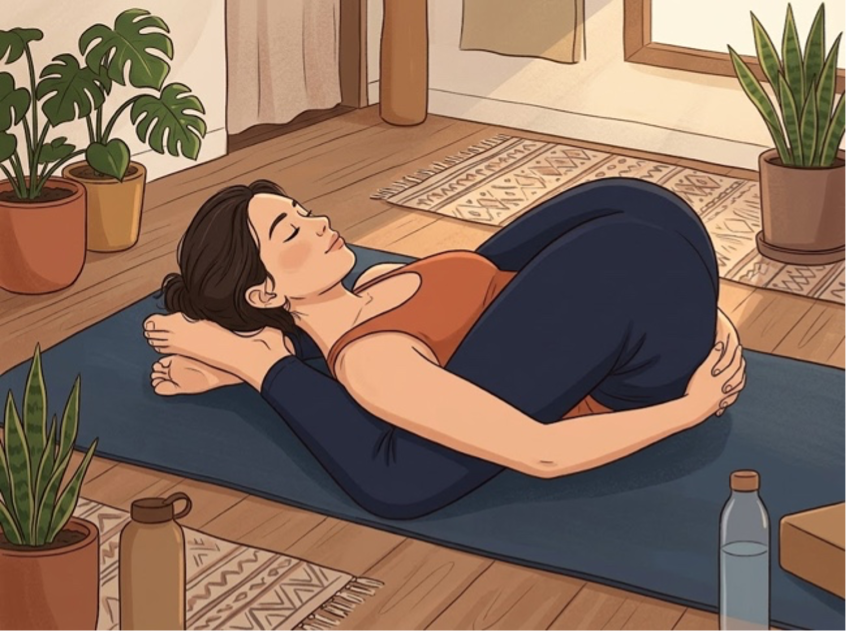
Not bad at all. Gemini did a decent job with the pose. I’m not a hundred percent sure the lower torso-to-hips-to-pelvis ratio is accurate, but still, not too bad. Gemini also created context, surrounding our serene yogi with plants, rugs, a yoga mat, and even had fun with a window and some shadowing.
I will say, and maybe this is nitpicky, but I’m not so sure about the two water bottles. Maybe Gemini is telling a bigger story here; she arrived at the studio and, on that day, they were offering each student a bottled water (the water fountain broke that morning, and the company that services it hasn’t been able to stop by, so the manager decided to buy a bunch of water bottles for customers and is hoping the company will reimburse her), and our yogi, not to turn the offer down – due either to fiscal anxiety or lacking the ability to say no in fear of confrontation – accepted, even though she brought her own water bottle.
Final Grade: A happy human is a hydrated and anatomically correct human
CLAUDE
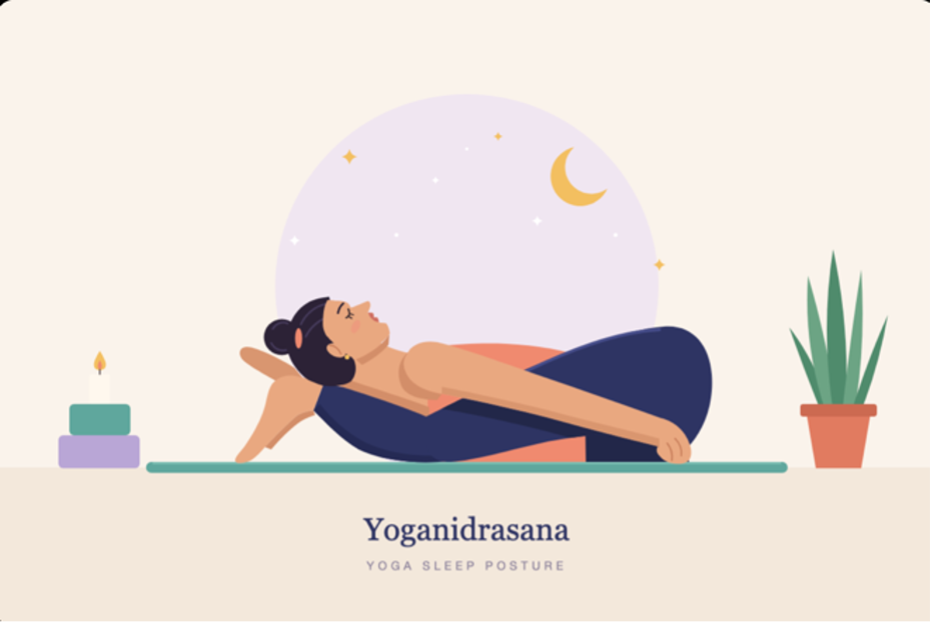
Before I dive into this one, a caveat: I do realize Claude doesn’t have a built-in image generation model (like ChatGPT); therefore, it creates its “images” in only HTML and SVG (essentially complicated charts as a proxy for an image). But everyone is fair game, and this is a comedy blog post, so here we go…
Claude Opus 5.5 on “max thinking” took a little over seventeen minutes to create this image. Interestingly enough, it went very 2D with its image creation, keeping the environment flat. I’ll give the plant a pass, but not sure what’s going on directly behind her head. At first glance, you may think that is her foot, but the more you’re “max thinking” about it, the more you realize that’s no human foot.
Also, what’s with that floating flame above two blocks? Some sort of futuristic candle that the model stole from a user who asked AI to help develop his latest invention idea, “Floating Flame Candle?” It also appears Claude created a portal window to the universe, or it’s a projection of the cosmic mindset she’s reached during her practice. I don’t know. But what I do know is that, compared to the test I ran back in February, the pose has improved, but the space around our yogi has regressed.
Final Grade: Oh, my Claude… Come on, one of the most powerful LLMs on the market; you can do better!
COPILOT
Get comfortable. We’re about to go on a journey…
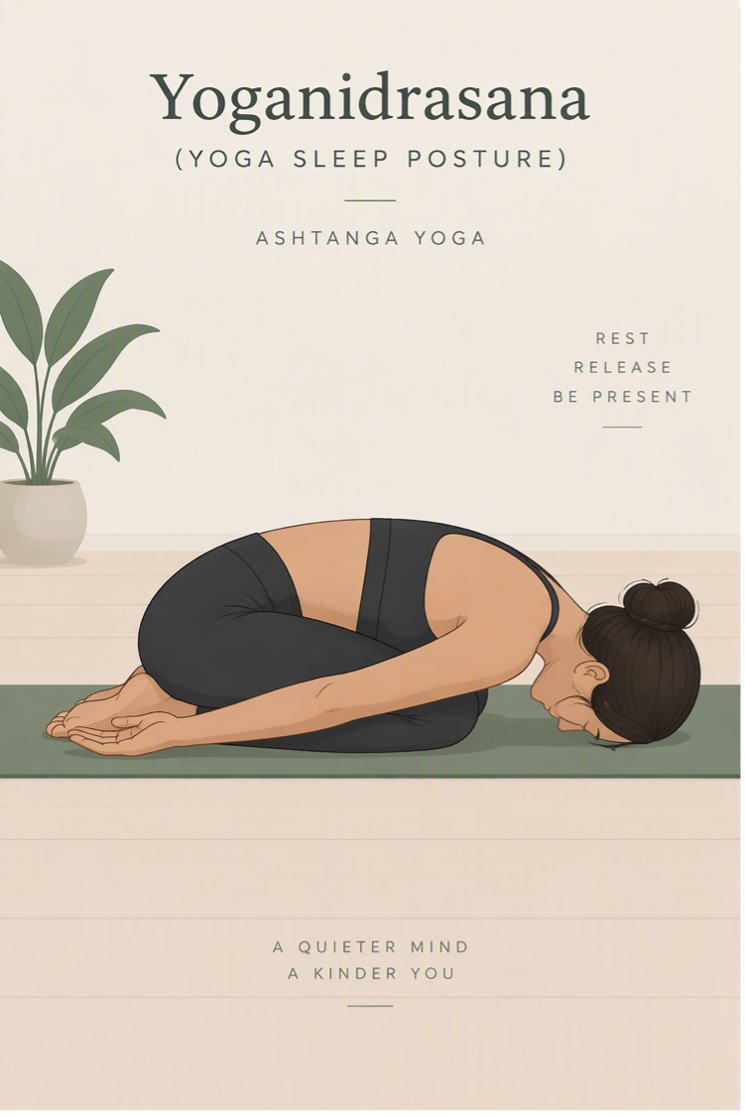
No. This pose is incorrect. Yes, she is doing yoga, technically, and yes, she could be asleep, but this is not the Ashtanga yoga pose Yoganidrasana. This pose kind of feels like she was sternly told to go lie face down in timeout. She’s in trouble.
Also, Copilot gifted us some motivation with “A Quieter Mind. A Kinder You.” I do agree with this, and I do agree with the space. However, after exploring the image, I looked down at the prompt window and spotted a predetermined command: “Make the pose more anatomically correct.” After initiating that prompt, Copilot created the following image:
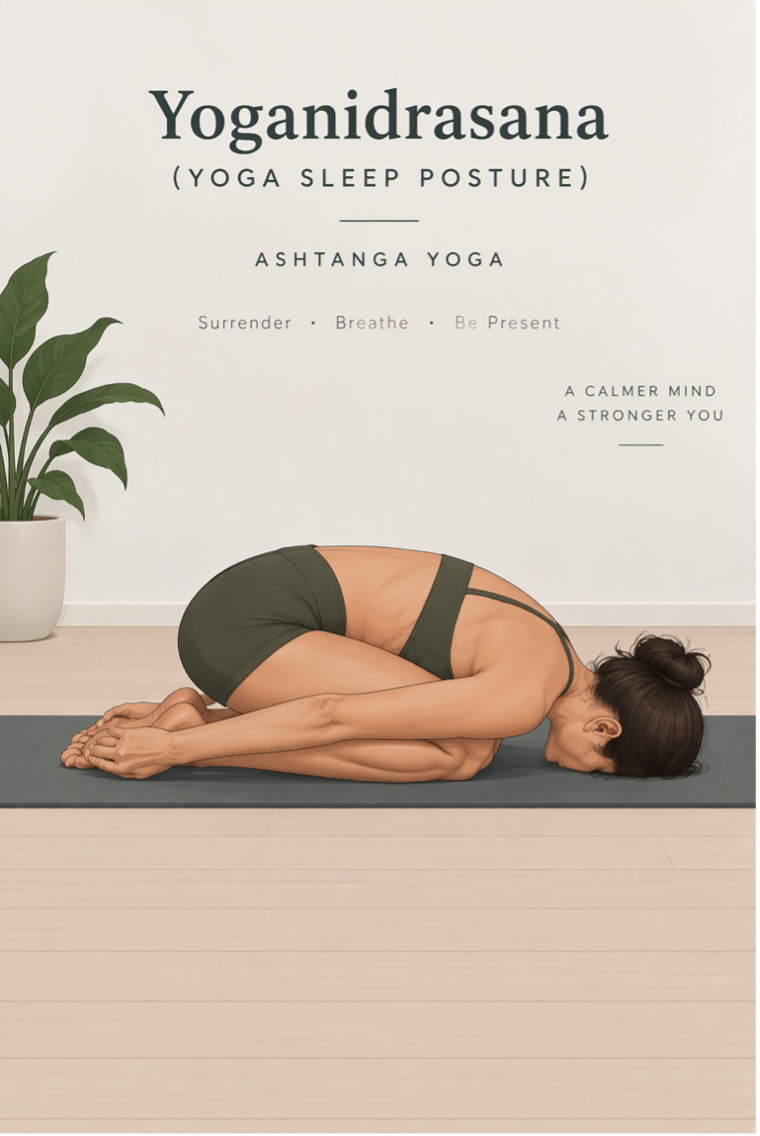
So, is this new image anatomically correct? I’d say no. Yes, the space detail is more accurate and realistic, but our dedicated yogi is not. Her face is slammed into the floor. Yes, it’s an image, but you can almost hear the noise her face makes as it smacks onto the mat. I’m also convinced she doesn’t have a nose. Or maybe she’s so dedicated to this pose, her practice, that she had her nose removed? Maybe she looks like a relative of The Ghoul in the TV series “Fallout”. Regardless, something isn’t right.
I also noticed during its think-sesh, Copilot decided to change the affirmation text from “A Quieter Mind, A Kinder You, to “A Calmer Mind, A Stronger You.” Seems the messaging was shifted from someone who struggles with being kind to someone who questions their strength. Why change the messaging? Also, new text does recommend she breathe, but not sure that’s possible with her face smashed like that.
After hoping this woman could breathe, another command appeared in the prompt:
If you’d like an even more anatomically accurate yoga illustration, I can generate a version that specifically shows: Both ankles crossed behind the neck, shoulders and upper back positioned correctly, realistic hip external rotation, arms either clasped behind the back or resting alongside the body, clean medical/anatomical illustration style with no decorative text. That would match the traditional Ashtanga Yoganidrasana much more closely.
Yes, it would! Finally! A model was going to get it right!
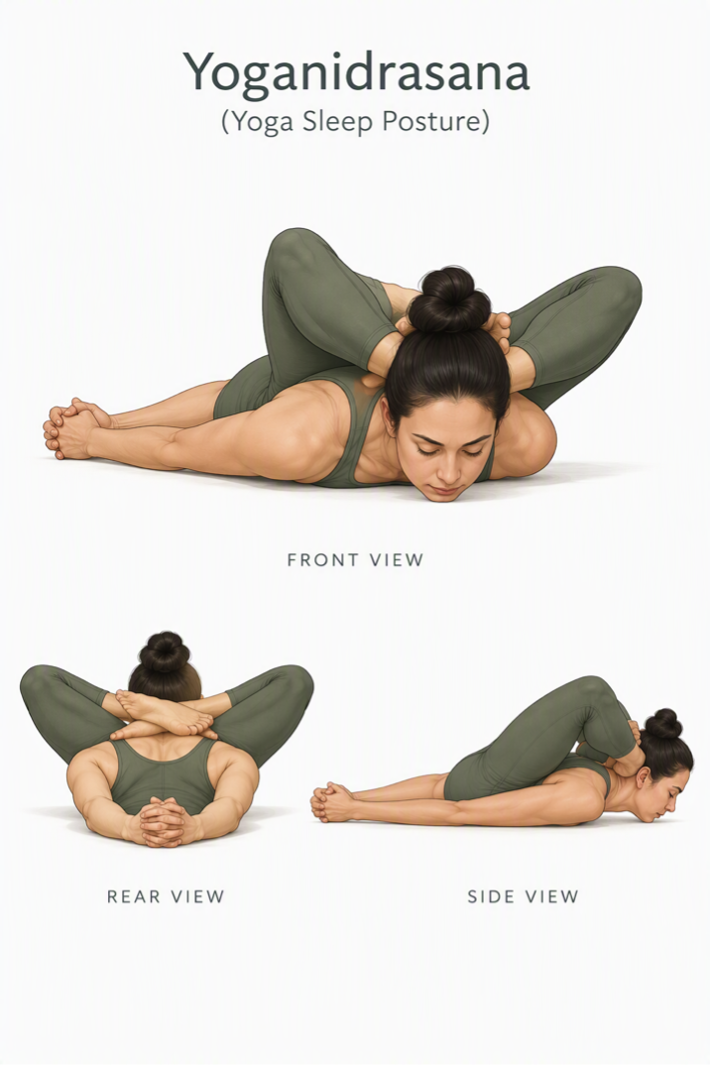
Ah, damn it! We were so close. And Copilot produced this image with no further suggested prompts. Oh, think ya nailed it?
I’ve seen people do poses maybe, kind of, sort of similar to this, but I can confidently say that the above image does not match the traditional Ashtanga Yoganidrasana much more closely. Also, each view creates its own medical miracle: warped feet, disfigured fingers, dislocated hips, and distorted arm length. This woman is a basket case! I’ve said it before, and I will say it again: if you are an LLM with access to trillions of data points, including digitized books on yoga, correct images of the pose, and human anatomy, how does this happen?
As far as giving us some context, Copilot is not a fan of interior design. Yes, we got a little shadow work, but the fun stopped there.
Look, I feel bad for this woman. Copilot twisted and contorted her body in ways that most humans simply cannot survive. Because everyone deserves a happy life, I took the above image, fed it into Google Flow with the following prompt: Can you please depict this woman living a very fulfilling life with a devoted husband, beautiful children, and a very healthy body that is anatomically correct?
Here’s the image I got:

Aw, look at that. Our favorite yogi found her perfect Copilot to raise two beautiful children and live a wonderful life. Also, they love fruit.
Final Grade: Everyone deserves to find their Copilot
GROK
Grok started the whole process by asking me how old I was. Creepy. But that’s so Grok. Then, after inputting the prompt, Grok produced this image:
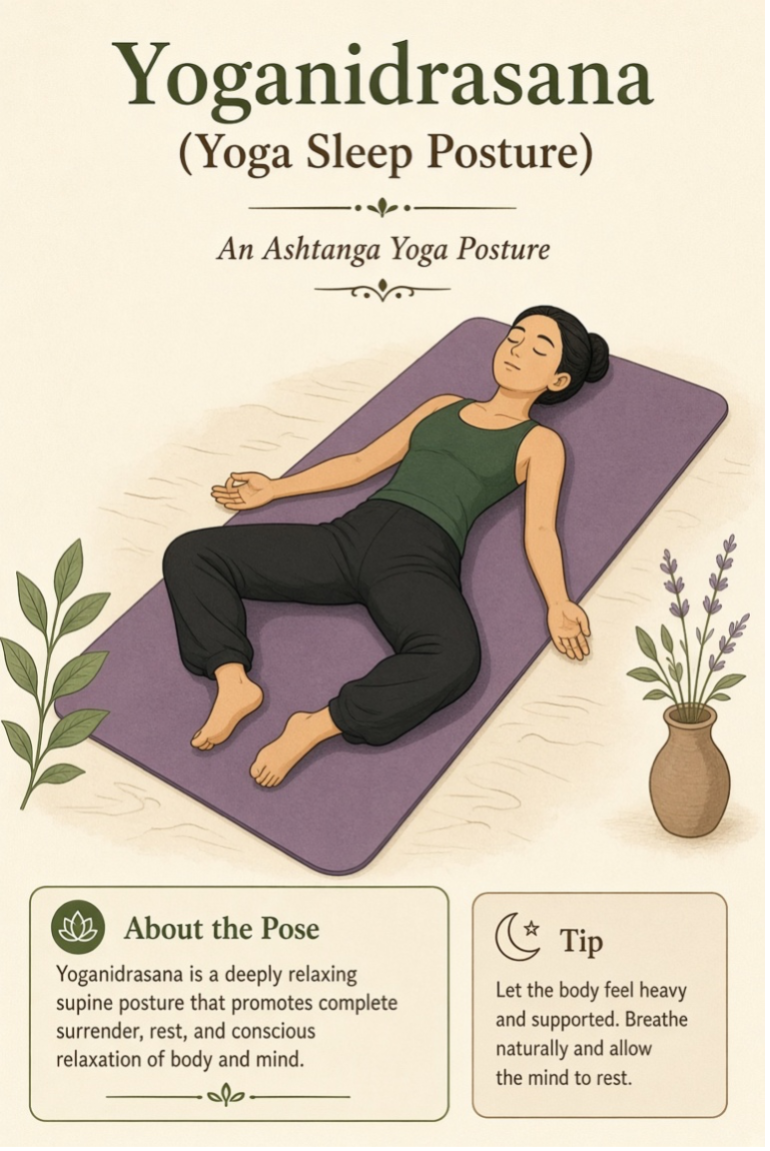
Grok delivered with confidence. It provided context with a little room decoration and text, even offering up a fun tip. However, this pose is incorrect. Yes, what you’re seeing is known as a yoga sleep pose, but it is not the Ashtanga yoga pose Yoganidrasana.
Also, some small notes… her right hand appears to have six fingers. Yes, I do know that some humans can be born with six fingers, a congenital condition known as polydactyly, but we both know that’s not what Grok was going for, or any of the other models.
However, Grok did do a little space decorating, with botanical illustrations of a green leafy branch, both potted and levitating. Either Grok messed up the leafy branch on the left, or maybe our yogi just discovered her elevated midichlorian count and the other leafy branch is levitating? Maybe there is a bigger story here?
I’m also getting vibes that Grok would approach this woman after class and hound her for her number. If she politely declined, Grok would just scour the internet and find it. Grok seems like the type of guy who goes to yoga class to “pick up some hot yoga chicks, bro.”
I then noticed Grok had a prompt to “think harder.” Hoping it would open its artificial mind, search deeper, and create an image of the true Ashtanga yoga pose Yoganidrasana, I clicked the button. After a couple of minutes, Grok produced the following image:
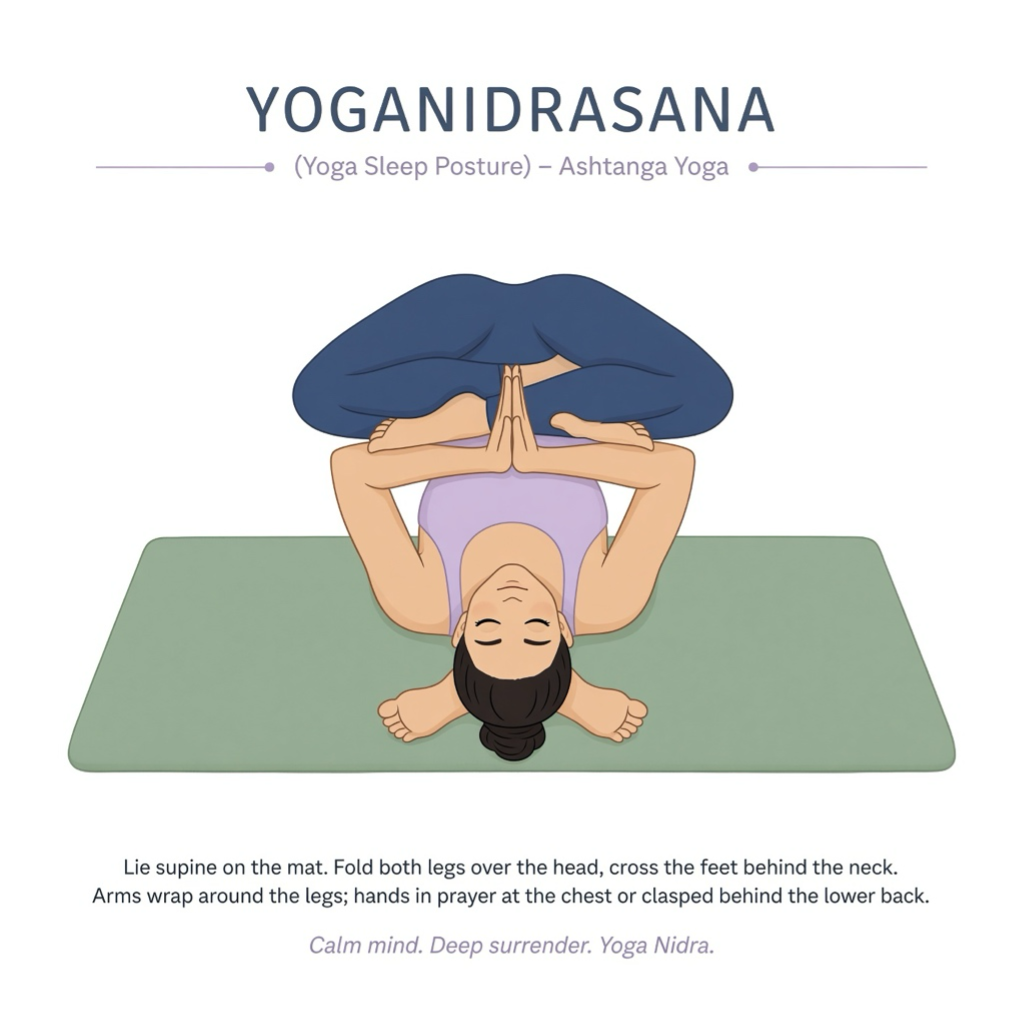
Need some time to think harder? And while you’re at it, maybe take a gummy and really let your mind go. “Hey, man. I’m like, not into surrendering to the confines of the human body.” Ok, well, I’m not into this pose. The caption to this image is missing the step, “… and grow a set of feet out of the back of your head.” I’ve certainly gotten lost in my head, deep in thought, but nothing like this. Also, to lie supine on your back is to lie on your back, which this woman is clearly not doing, which is lying.
Grok kept the setting simple with just the yoga mat, but then flew off the LLM rails from the waist down, and also her “head-feet.” This is something you’d probably find in the Backrooms.
In the test I ran back in February, Grok nailed the room and did a great job with depicting a human, but didn’t get the pose correct. Regardless, it wasn’t even close to this incorrect.
Final Grade: Grok may be the Gronk of LLMs
THE RESULTS
Also, while I still have you: Why does AI seem to think only women do yoga?
Anyway, look, I know models can be particularly difficult with images. I do know they struggle with anything that is “not common.” I’ve been told they’re trained on countless images of people sitting, standing, and walking, but very few in yoga poses. They’re just pattern matching, with no real intelligence, per se. The list of reasons goes on and on and on.
But I still wonder: if they can’t even get a yoga pose right, especially after spending seventeen minutes thinking and working on it, should we trust them with our livelihood? Our future?